
Services /
Educational programs for children
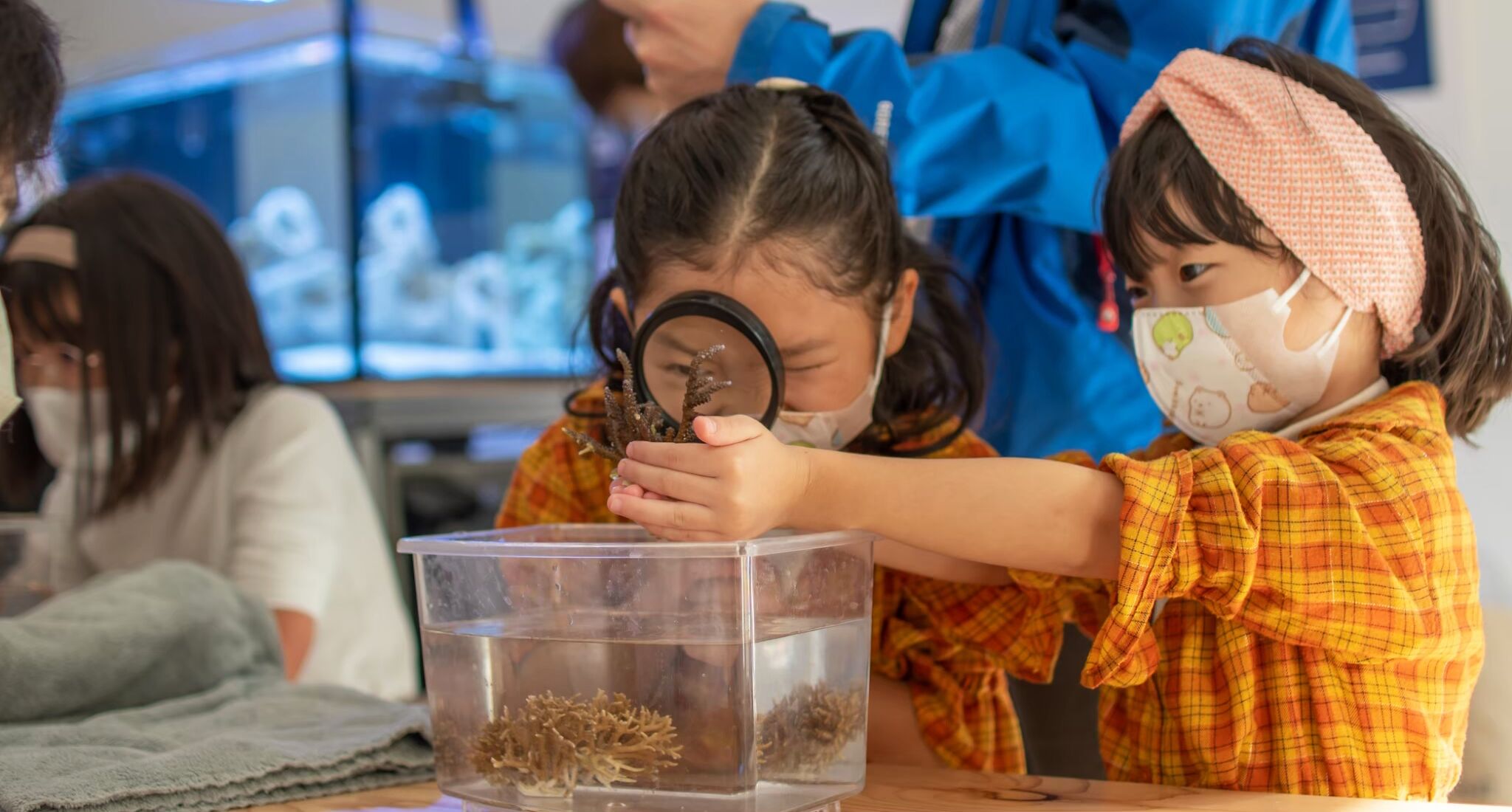
We plan and run hands-on environmental education and citizen-science programs with companies, local governments and schools. Our Coral Reef Lab® has been running since 2020, with more than 6,000 children having taken part in total. A hands-on program for elementary-school children: touching real coral, a workshop comparing bleached specimens, and quiz-style learning about ecology. It also includes a citizen-science element where children experience hypothesis testing as "apprentice researchers" (for example, an experiment on what a mushroom coral eats). It has run at commercial facilities, corporate events and in local communities.
Where Educational programs for children helps
Corporate sustainability teams
We want to create a chance to learn about nature as a family day or sustainability activity.
Corporate new-business & R&D teams
We want to gather research-useful data through citizen science.
Commercial facilities
We want to run a living-things-themed event to attract visitors.
Local governments
We want education that uses local nature to support regional revitalization.
Individuals
We’re looking for a chance for children to learn deeply about living things and nature.
What we offer
We plan and run hands-on environmental education and citizen-science programs with companies, local governments and schools. Our Coral Reef Lab® has been running since 2020, with more than 6,000 children having taken part in total. A hands-on program for elementary-school children: touching real coral, a workshop comparing bleached specimens, and quiz-style learning about ecology. It also includes a citizen-science element where children experience hypothesis testing as "apprentice researchers" (for example, an experiment on what a mushroom coral eats). It has run at commercial facilities, corporate events and in local communities.
Our strength
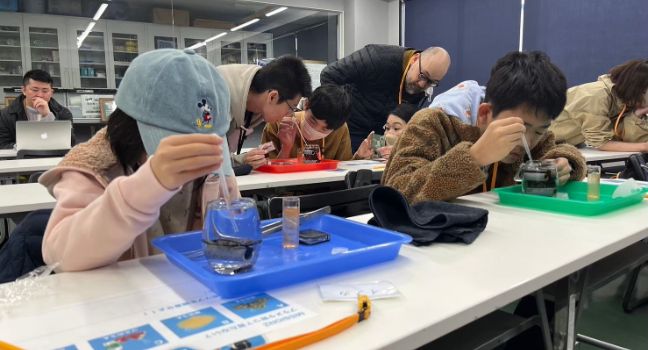
We have run it since 2020, with more than 6,000 children taking part in total. Because it is run by biosphere engineers who work with living things every day, children observe live corals rather than displays or videos.
Deliverable
We run the programme end to end - planning, running the day, teaching materials and providing live corals and other living things. In the citizen-science format, you also get the observation data the children collect as "junior researchers."
Example
Citizen Science at Expo 2025 Osaka-Kansai
A participatory research program where children themselves act as researchers testing a hypothesis.
- Read the case: Beppu City Talent Discovery Program (nature experiences with five-year-olds) →
- Read the case: Citizen Science at Expo 2025 Osaka-Kansai →
Cases & voices
Loading…
All programs
INNOQUA runs “environmental edutainment” - learning through play, with nature as a question that has no single right answer - from the sea to cities, rice paddies and hot springs. Combining nature with technology, energy, the local community or the city is how we bring in everyone from children and adults to companies, local governments and schools.
Companies work with us on community contribution, next-generation development, events and showcasing their own technology; local governments on environmental education and valuing local nature; schools on field trips and inquiry learning.
Nature × technology
Children get their hands on the tools used to explore the sea.
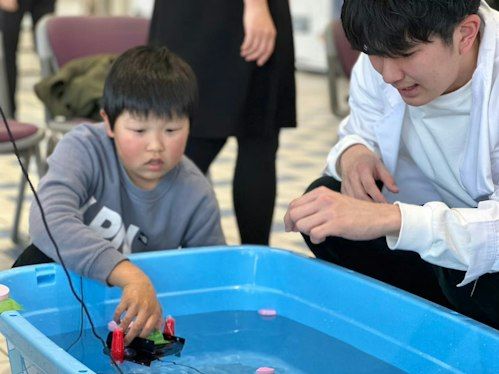
Drone Lab! (Oarai, December 2023). Photo: INNOQUA article Nature × technology
Drone Lab! (Oarai, Ibaraki)
- What participants do
- Children learn about the sea off Oarai through quizzes at a tank that recreates it, then build underwater drones themselves and practise flying them.
- For
- Elementary and junior-high students in and around Oarai
- Run with
- Mitsui O.S.K. Lines and INNOQUA (the first marine-education event with Oarai Town and MOL)
- Used for
- Marine conservation and education run jointly by a company and the town
- Editions
- Oarai Ferry Terminal (December 2023)
Related case: MOL’s permanent tank in Oarai
Sources: INNOQUA article (December 25, 2023) / MOL news (external site)
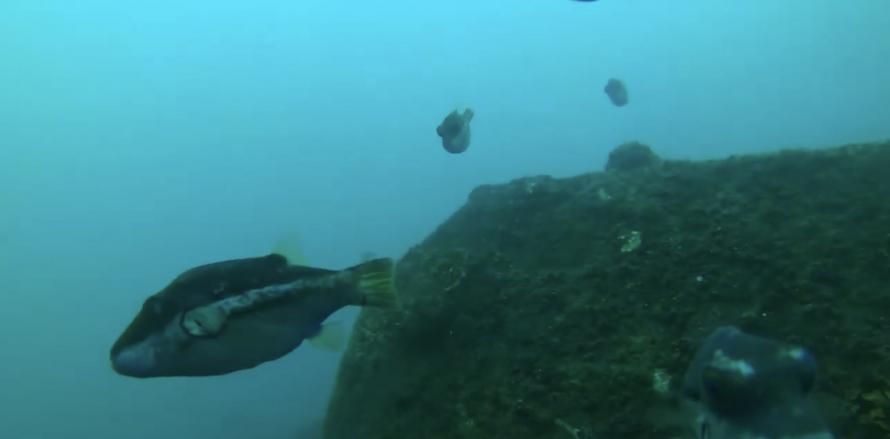
Yokohama’s sea through an underwater drone (from the announcement, 2024). Photo: INNOQUA article Nature × technology × the city
Exploring Yokohama’s sea from the Seabus: Underwater Drone Lab
- What participants do
- After a short talk on seaweed beds, children on board a water bus watch live footage from an underwater drone lowered by our staff and play a bingo of the sea life they spot in Yokohama.
- For
- Elementary-school children (with a parent)
- Run with
- Yokohama Bay Quarter and INNOQUA (with Port Service)
- Used for
- Hands-on learning offered by a shopping centre and a transport operator
- Editions
- The “Seabus” water bus from Yokohama Bay Quarter (August 2024)
Sources: INNOQUA article (July 8, 2024) / Yokohama Bay Quarter event page (external site)
Nature × technology
Underwater Drone Lab (with Nippon Marine Enterprises)
- What participants do
- Day 1: children assemble a small underwater drone and try an ocean survey in a tank. Day 2: on the rocky shore at Jogashima they operate a drone used in real ocean surveys and look for sea life on screen.
- For
- Children
- Run with
- Co-hosted by INNOQUA and Nippon Marine Enterprises
- Used for
- Next-generation education by a company with ocean-survey technology
- Editions
- INNOQUA’s office (July 2023) and Jogashima, Kanagawa (October 2023)
Nature × energy and food
Experiments with everyday seaweed reveal pigments, light, energy and flavour.
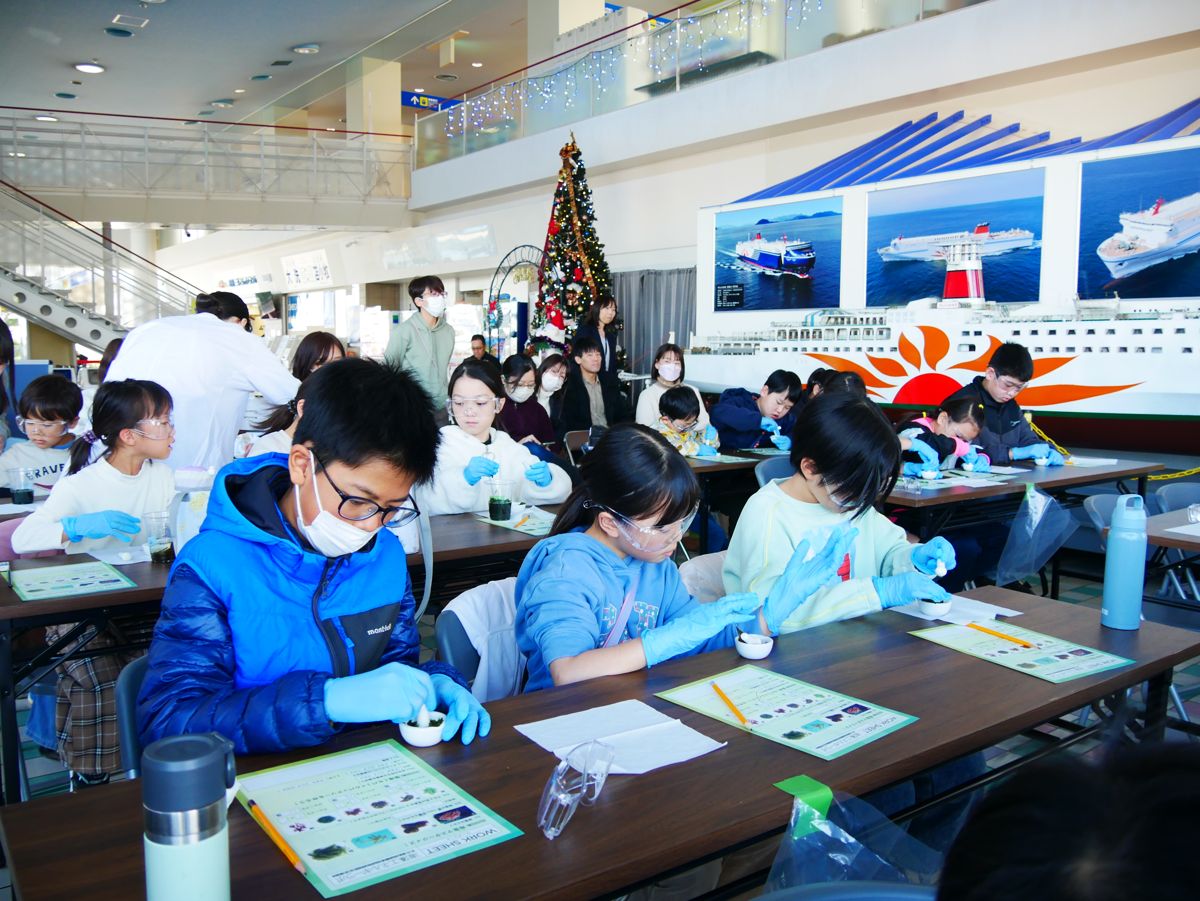
Seaweed Energy Lab! (Oarai, December 2025). Photo: INNOQUA article Nature × energy
Seaweed Energy Lab! Making a “moba-ile” battery?
- What participants do
- Children learn seaweed types and colours through quizzes and experiments, then shine light on pigment extracted from seaweed to generate energy and run a music box or an LED.
- For
- Elementary and junior-high students in and around Oarai
- Run with
- Co-hosted by INNOQUA and MOL (the fourth Oarai marine-education event)
- Used for
- Ongoing marine education by the town, a company and local businesses
- Editions
- Oarai Ferry Terminal (December 2025)
Related case: MOL’s permanent tank in Oarai
Sources: INNOQUA article (December 28, 2025)
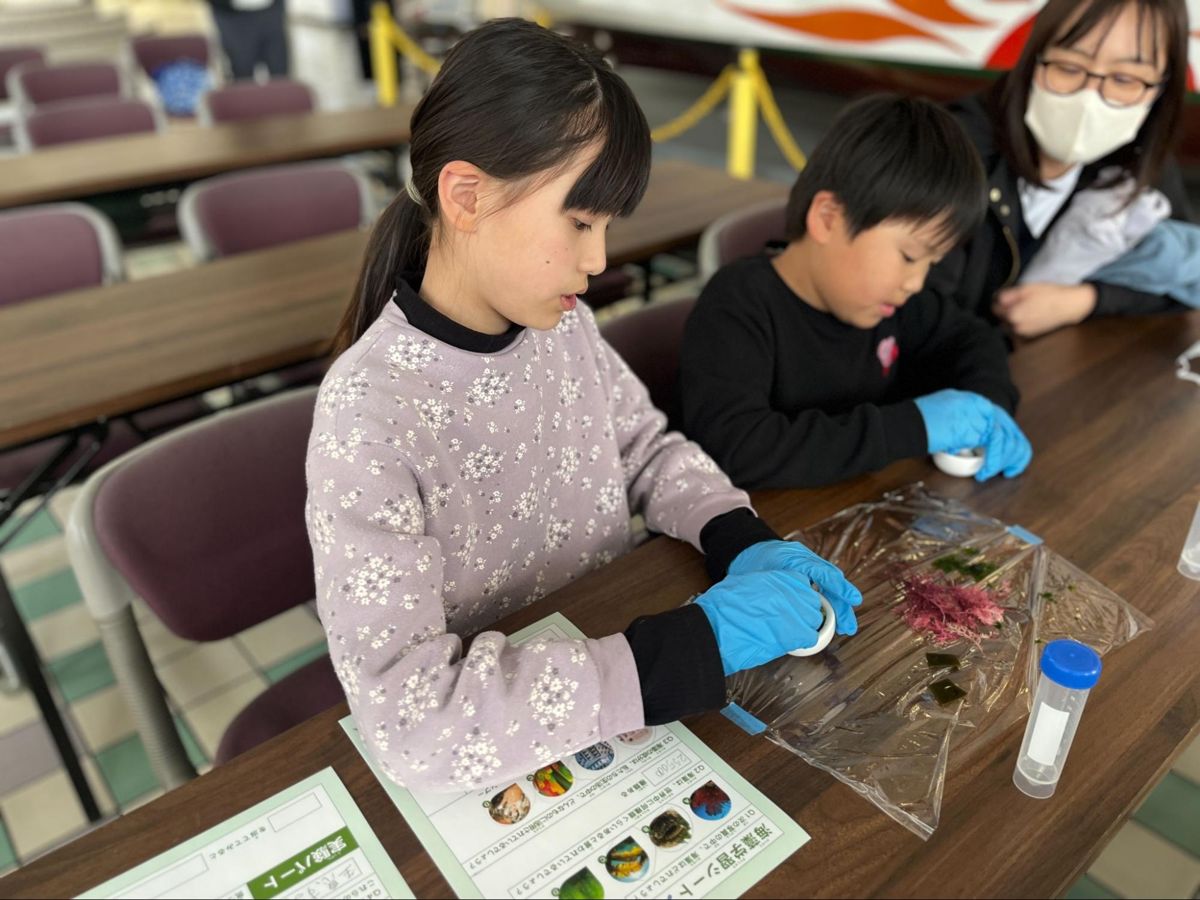
Seaweed Heroes! (Oarai, March 2025). Photo: INNOQUA article Nature × food
Seaweed Heroes! The secret of flavour
- What participants do
- Children grind kombu, wakame and other seaweeds to extract photosynthetic pigments and watch them glow under ultraviolet light, and learn about seaweed flavour and the environmental issues around seaweed.
- For
- Children (elementary and junior-high)
- Run with
- Oarai: co-hosted with MOL and Sekisho; Kanonji, Kagawa: hosted by INNOQUA, co-hosted by Taisei Namacon (part of the Setouchi Nagisa Forum)
- Used for
- Education about the local sea with local companies and banks
- Editions
- Oarai Ferry Terminal (March 2025), Kanonji Civic Hall (December 2025)
Sources: INNOQUA article (May 9, 2025) / INNOQUA article (January 9, 2026)
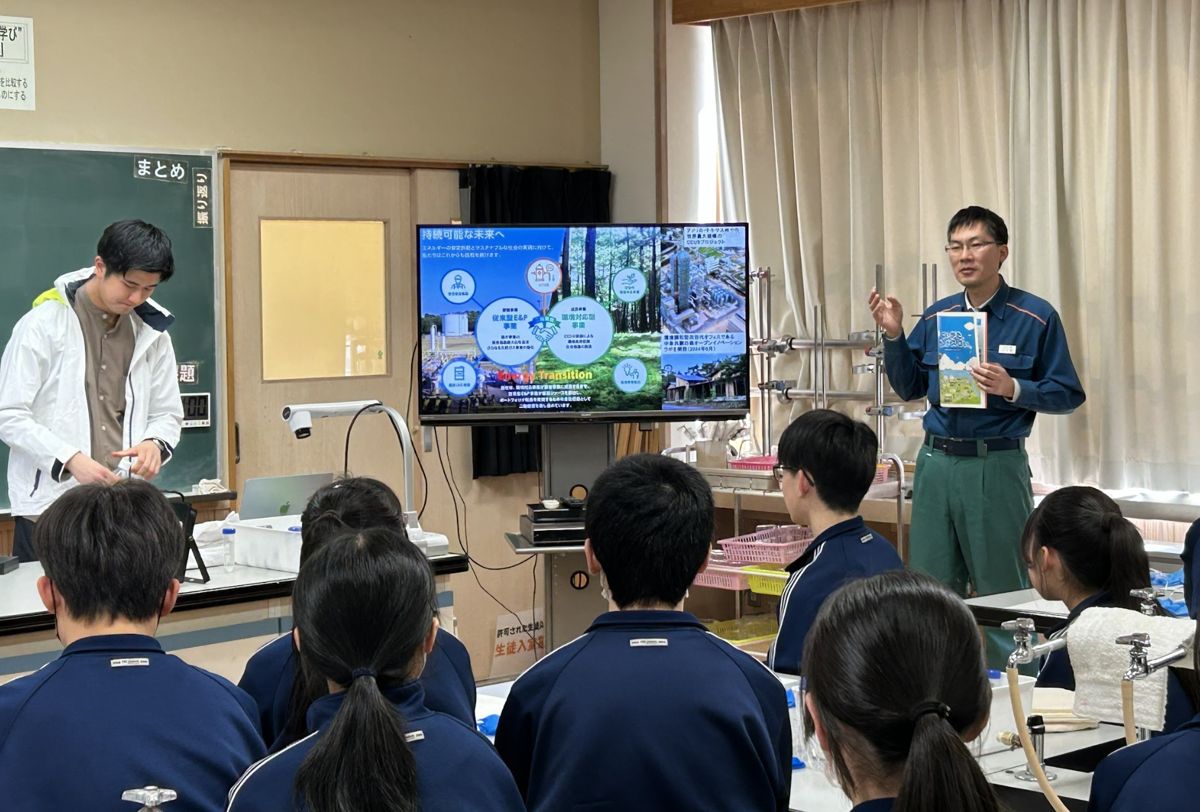
Workshop at Nakajo Junior High School (March 2026). Photo: INNOQUA article Nature × energy
Workshop on Niigata’s sea and energy
- What participants do
- A seaweed quiz and an experiment extracting photosynthetic pigments, then learning about seaweed farming using offshore wind power.
- For
- First- and second-year junior-high students
- Run with
- ENEOS Xplora Nakajo site and INNOQUA
- Used for
- Community engagement and next-generation education by an energy company, held at a school
- Editions
- Nakajo Junior High School, Tainai, Niigata (March 2026)
Sources: INNOQUA article (March 23, 2026)
Nature × the local community
Learning built with local governments, local companies and banks, using the area’s own sea, rice paddies or hot springs.
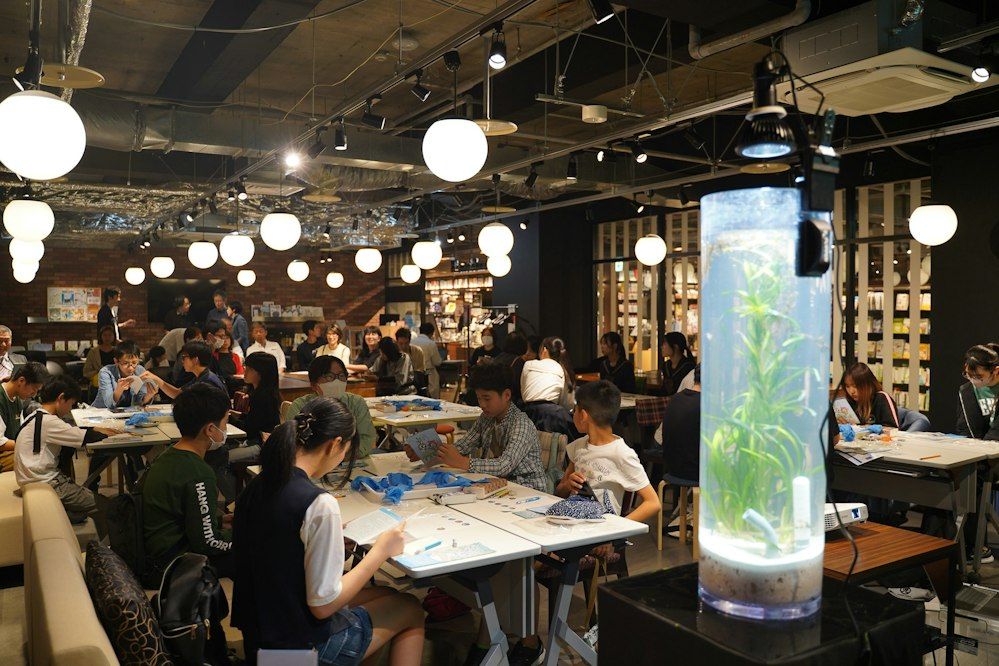
Seagrass Lab (Okayama, May 2024). Photo: INNOQUA article Nature × the local community
Seagrass Lab (incl. Eelgrass Lab and Sea Forest Lab!)
- What participants do
- Children observe a tank recreating eelgrass and run experiments from their own hypotheses (for example, testing the sugar in eelgrass rhizomes with test strips). In Okayama, children selected from the participants also joined a field survey.
- For
- Elementary to high-school students (by edition)
- Run with
- Okayama: hosted by The Chugoku Bank, planned and run by INNOQUA; Toyohashi: hosted by Marushime and INNOQUA; Shiodome: Nippon TV’s summer school; Fukuyama: hosted by Chugin FG, Hirogin HD and INNOQUA, co-hosted by Fukuyama City
- Used for
- Community contribution by regional banks and companies, environmental education with local governments
- Editions
- Okayama (May 2024), Toyohashi, Aichi (July 2024), Shiodome, Tokyo (August 2025), Fukuyama, Hiroshima (January 2026)
Sources: INNOQUA article (May 12, 2024) / INNOQUA article (May 28, 2024) / INNOQUA article (July 3, 2024)
Nature × the local community
Seaweed-Bed Science Lab (Oarai, Ibaraki)
- What participants do
- Tank observation, quizzes and experiments on the role of seaweed beds and the difference between seaweeds and seagrasses, then a field survey on the rocky shore at Oarai and an experiment on changing seaweed pigments.
- For
- Elementary and junior-high students in and around Oarai, with parents
- Run with
- MOL and INNOQUA (the second Oarai marine-education event)
- Used for
- Seaweed-bed conservation by the town and a company (held alongside the Oarai seaweed-bed summit)
- Editions
- Oarai Ferry Terminal and Oarai coast (July 2024)
Sources: INNOQUA article (September 10, 2024) / MOL press release (PR TIMES)
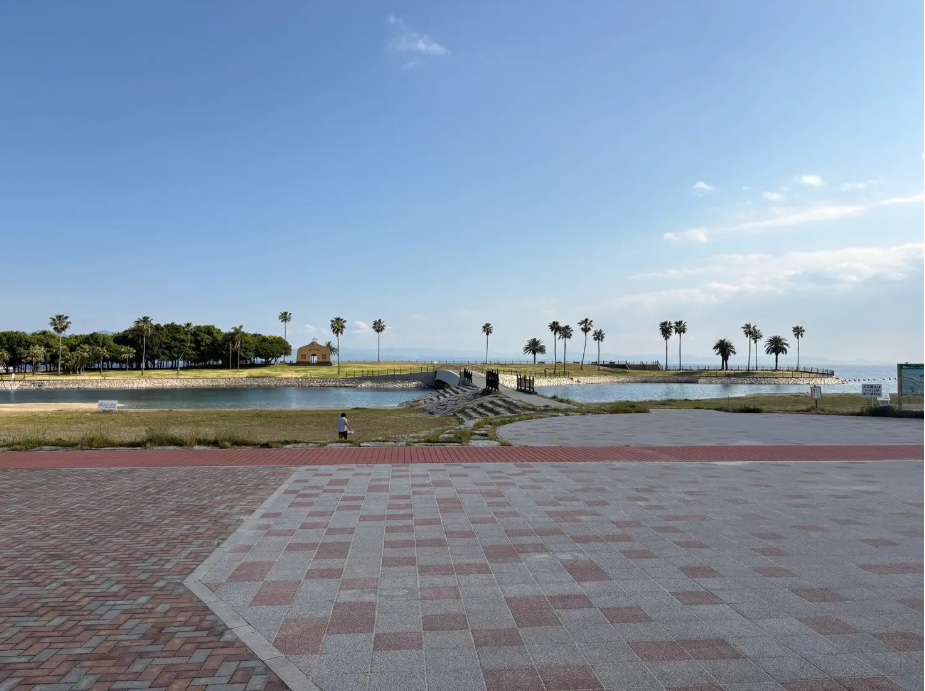
Venue of the seashore experience: Tanoura Beach. Photo: INNOQUA article Nature × community × talent
Talent Discovery Program (Beppu, Oita)
- What participants do
- Field experiences at the seashore and hot springs, such as looking at microorganisms under a microscope; staff record each child in an “Awareness Notebook” handed on to elementary school.
- For
- Five-year-olds at every public kindergarten in the city
- Run with
- Beppu City and INNOQUA
- Used for
- A municipality’s pre-school education and the hand-over to elementary school
- Editions
- Beppu (running May–November 2026 as scheduled)
Read the case: Beppu Talent Discovery Program
Sources: INNOQUA press release (May 18, 2026)
Nature × the local community
Rice Paddy Lab (Kanuma, Tochigi)
- What participants do
- A four-session program: fieldwork in rice paddies and at a waste-treatment centre, designing hypotheses and experiments, and presenting the data on a poster.
- For
- Children
- Run with
- INNOQUA with Kanuma City
- Used for
- A municipality’s environmental education
- Editions
- Kanuma (announced for July–August 2026)
Sources: INNOQUA article (May 22, 2026)
Nature × the city
We bring real coral reefs and mangroves into shopping centres and offices.
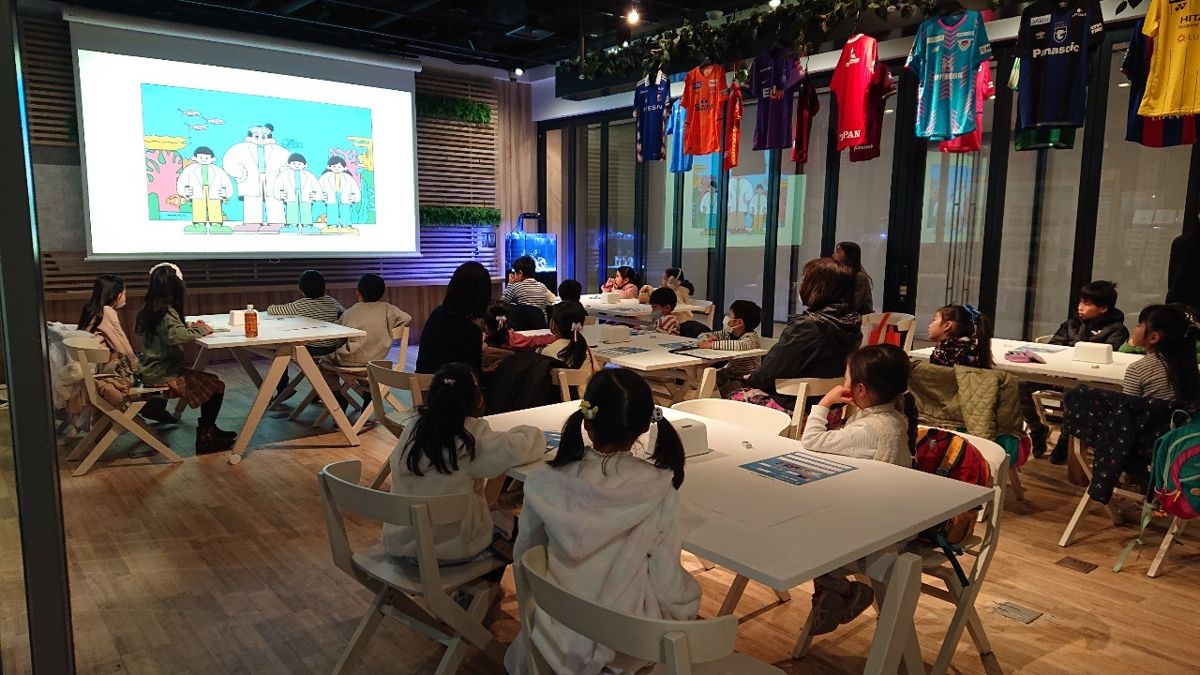
Coral Reef Lab in Marunouchi with Meiji Yasuda (January 2024). Photo: INNOQUA article Nature × the city
Coral Reef Lab® (incl. visiting editions)
- What participants do
- Observing and touching live coral, comparing bleached specimens and quiz-style ecology. Some editions explore corals that glow under certain conditions.
- For
- Mainly elementary-school children (up to high school in some editions)
- Run with
- Varies by edition - for example Mitsui Fudosan, Focus Systems with Shinagawa City, Meiji Yasuda Life, Okinawa Cellular, and an event in Takanawa organised by JR East and partners
- Used for
- Visitor events for shopping centres, company family days and community programs, environmental learning with local governments, and making use of a company’s own tank
- Editions
- Yokohama, Kyoto, Tokyo (Oshiage, Toranomon, Marunouchi, Shinagawa, Shinjuku, Takanawa), Chiba, Okinawa, Hiroshima and more (since 2020)
Sources: INNOQUA article (January 30, 2024) / INNOQUA article (February 10, 2026) / INNOQUA article (November 17, 2025)
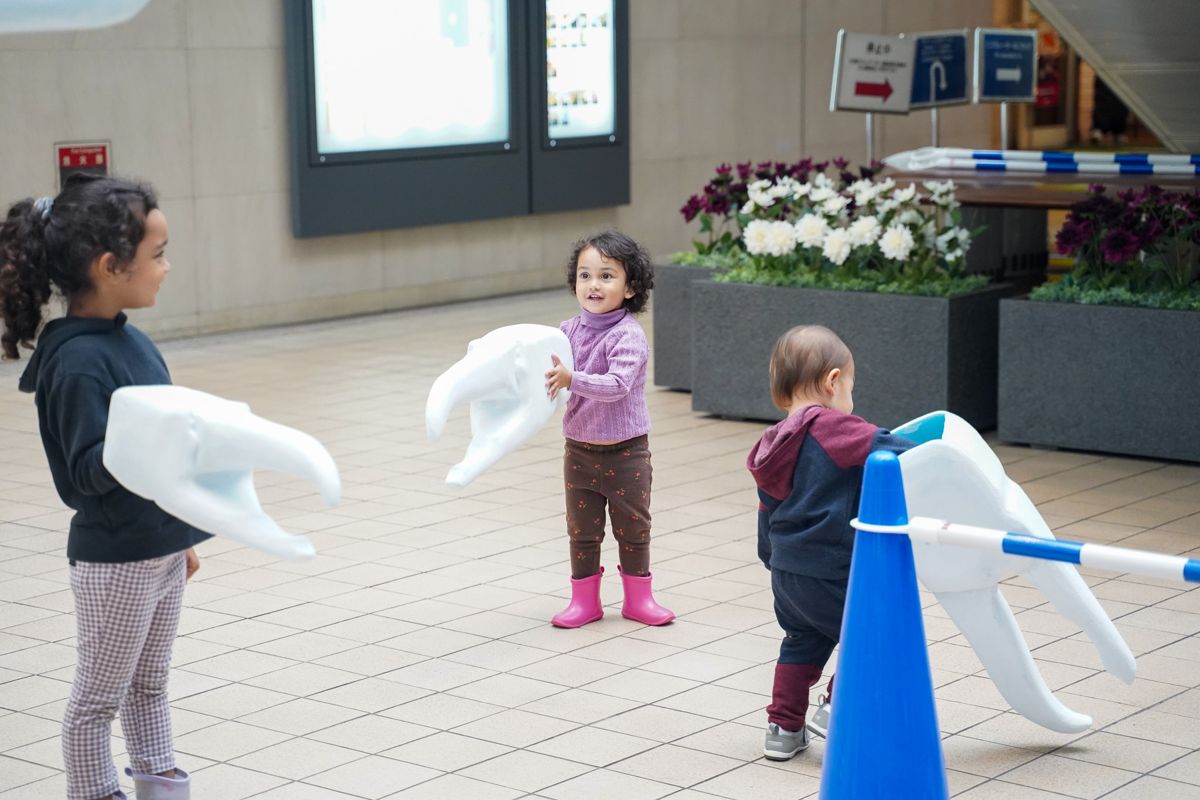
Trying the fiddler crab’s “waving” (October 2023). Photo: INNOQUA article Nature × the city
Mangrove Lab (Minatomirai, Yokohama)
- What participants do
- Children observe a tank recreating a mangrove ecosystem and try the fiddler crab’s courtship “waving” with claw-shaped gloves.
- For
- Elementary and junior-high students
- Run with
- Hosted by Tokyu Malls Development, planned and run by INNOQUA
- Used for
- A shopping-centre event
- Editions
- Minatomirai Tokyu Square (October 2023)
Sources: INNOQUA article (October 16, 2023)
Nature × inquiry and a place to belong
Teenagers dig into their own themes while working with living things.
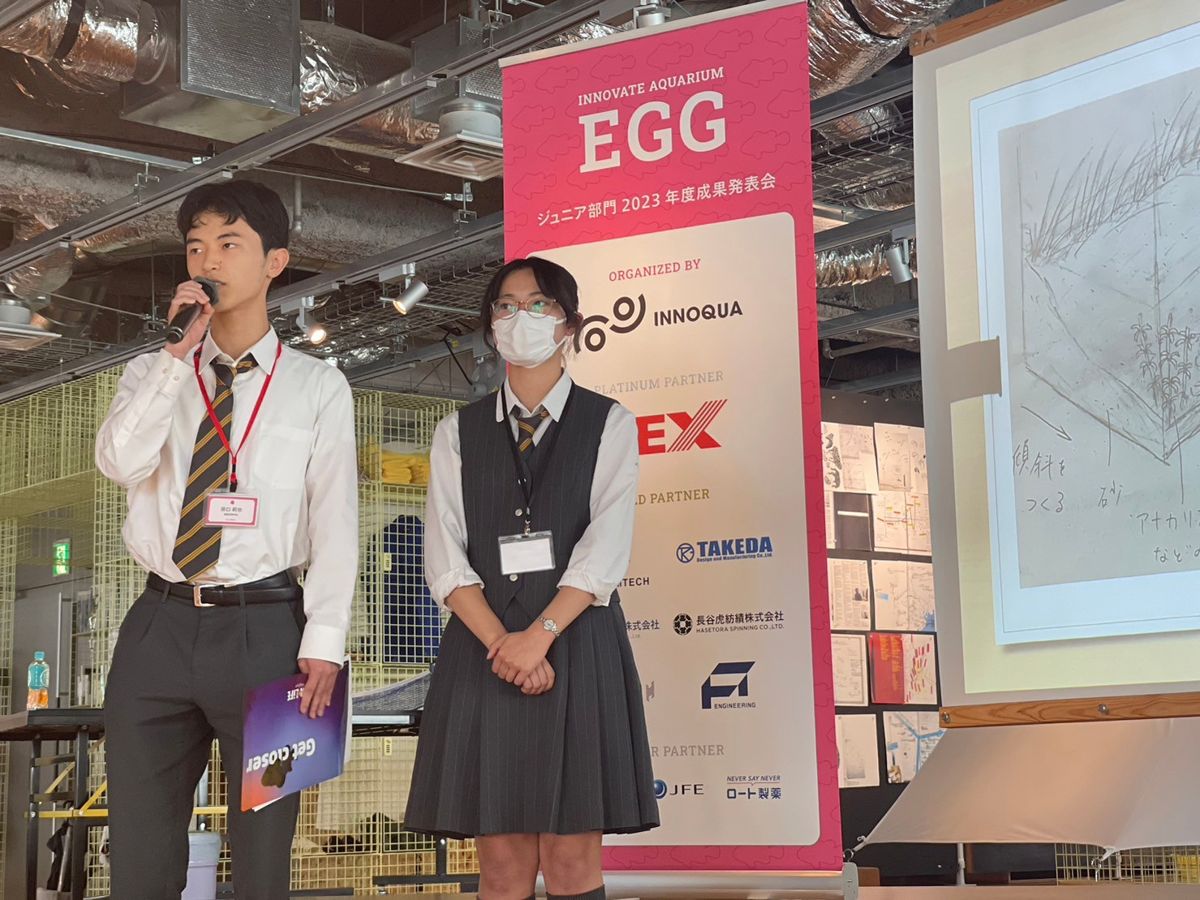
INNOVATE AQUARIUM EGG (2023). Photo: INNOQUA article Nature × inquiry
INNOVATE AQUARIUM EGG
- What participants do
- School biology clubs and others set up a tank, investigate a theme and present their results.
- For
- Junior-high and high-school students and others
- Run with
- INNOQUA (with corporate sponsors)
- Used for
- Next-generation development supported by corporate sponsors
- Editions
- Since 2023 (interim presentations in Kansai and Kanto, final presentations at the AWARD)
Sources: INNOQUA article (October 30, 2023)
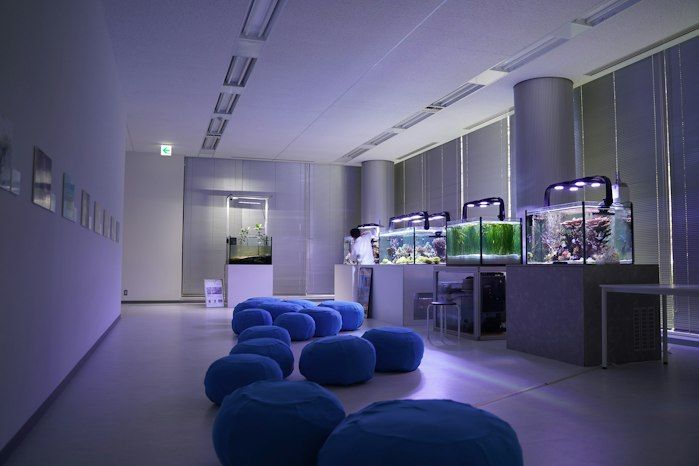
The AQUABASE space (Bio Ark). Photo: INNOQUA article Nature × a place to belong
AQUABASE
- What participants do
- Teenagers spend time freely in a space full of tanks and explore water environments.
- For
- Teenagers who live, study or work in Bunkyo City
- Run with
- INNOQUA with Bunkyo City
- Used for
- A municipality’s place for young people
- Editions
- Inside INNOQUA’s office in Iidabashi, Tokyo (since May 2025)
Sources: INNOQUA article (January 30, 2025) / AQUABASE official site (external site)
Citizen science: the public joins the observation
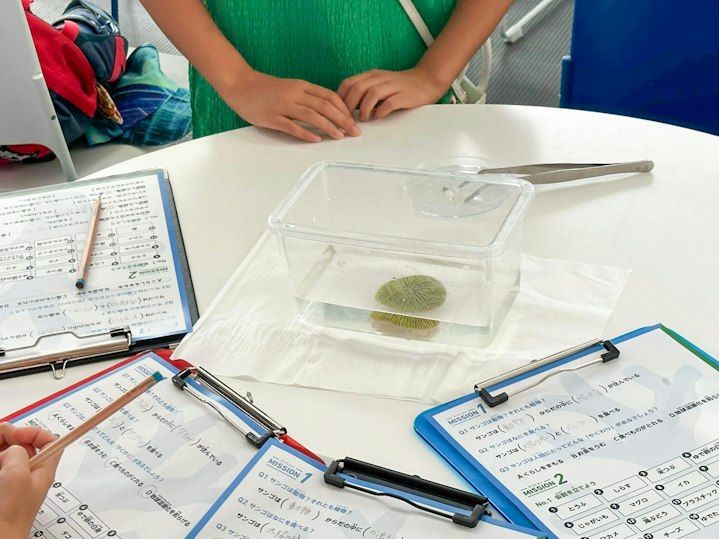
Not a one-off experience: participants act as researchers, form hypotheses, observe and record - with the aim of feeding the data into research.
“Find What Corals Like!” (incl. the Expo 2025 Osaka-Kansai edition)
Children form hypotheses about what corals like to eat, feed them vegetables, seaweed, fish and more, and observe and record what happens. Run with Aramco Asia Japan at Miraikan (2023), Marunouchi, Tokyo (2024) and Nago, Okinawa (2025); at the Expo the aim was to publish everyone’s data in an academic paper.
Read the case: Citizen Science at Expo 2025 Osaka-KansaiInnoqua Quest (nature surveys with adult aquarists)
Aquarists met through Innoaku join INNOQUA’s field surveys - three trips in April 2025 to Sagami Bay, Gunma and Niigata.
Read the case: Innoqua Quest
Before you get started
- Can a program be planned around our organization’s goals?
- We develop the content together around purposes such as community contribution, next-generation learning or use of your technology and sites. Share the target age, group size, location, timing and any conditions already decided.
- Are there themes beyond coral?
- Our examples include underwater drones, seagrass, seaweed beds and nature experiences. The program lineup on this page describes activities, audiences and locations.
- How does citizen science differ from a hands-on event?
- In citizen science, participants contribute to observation or hypothesis testing. At Expo 2025, children experienced experiments as apprentice researchers. Formats and the data recorded vary by project.
- Can you also run the program on the day?
- You can consult us about planning, teaching materials, living organisms and on-site operation. Details are developed around the conditions of the event. Individuals should check the notices for each event to take part.
For individuals who want to take part
If you would like to take part as an individual, or bring your child, please check the details of each edition’s participant recruiting on our Get involved page.
How to start
We welcome proposals for joint programs with companies, local governments and schools. Send us your purpose (community contribution, next-generation development, events, making use of your own technology or site) along with the target age, number of participants, location and timing, and we will build the program with you from the lineup above.
This opens your mail app. Nothing is sent until you send it.